


How do you know if your innovation has truly made a difference?
In healthcare, quality improvement and innovation are often driven by passionate teams - but without dedicated resourcing, many valuable changes fade over time.
In fact, even the most promising initiatives can stall when teams lack access to the data or evaluation tools they need to demonstrate success. Clear evidence is critical not only for accountability but also to inspire confidence among leadership and clinicians.
Health Roundtable is addressing this challenge by applying advanced data science methods to assess whether innovations have a statistically significant impact, providing the evidence needed to sustain momentum, justify investment, and keep staff engaged in meaningful change.
This approach goes beyond basic reporting. By leveraging predictive analytics and rigorous evaluation frameworks, teams can confidently demonstrate outcomes that are directly linked to their initiatives.
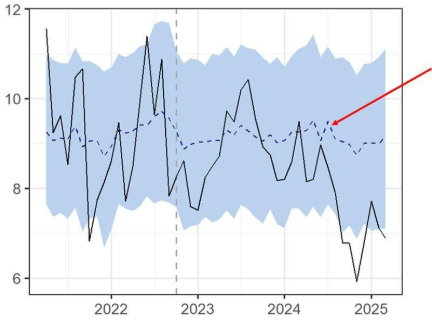 At the 2025 Health Roundtable Innovation Showcase, we demonstrated how data science can measure statistically significant outcomes. One example was Royal Melbourne Hospital’s redesign of its General Medicine model of care, addressing high demand and long lengths of stay. The impact was clear - an impressive 7,951 bed days saved, aligning with strategic goals and improving patient flow. The Graph on the left (Optimising Patient Flow: A Redesign of General Medicine Care Models) shows predicted average length of stay with no intervention (dotted line) vs the actual average length of stay on the dark black line after redesign.
This kind of evidence is essential to secure ongoing investment and drive sustainable healthcare transformation.
Robust data science is key to proving the value of healthcare innovation. Health Roundtable’s approach helps services measure real impact, sustain momentum, and justify future investment.
We believe this evidence-based mindset is essential for any organisation serious about long-term improvement. Whether you are launching a new initiative or refining an existing process, embedding an impact analysis from the outset sets the stage for measurable, lasting change.
If you’re a Health Roundtable Member, you can explore the Royal Melbourne Hospital case and other innovations by visiting the Health Roundtable Innovation Library to see data-driven transformation in action.
To learn more about this new approach and how it can be applied to your organisation’s data contact Health Roundtable at contact@healthroundtable.org